LOS ANGELES, April 6, 2026—
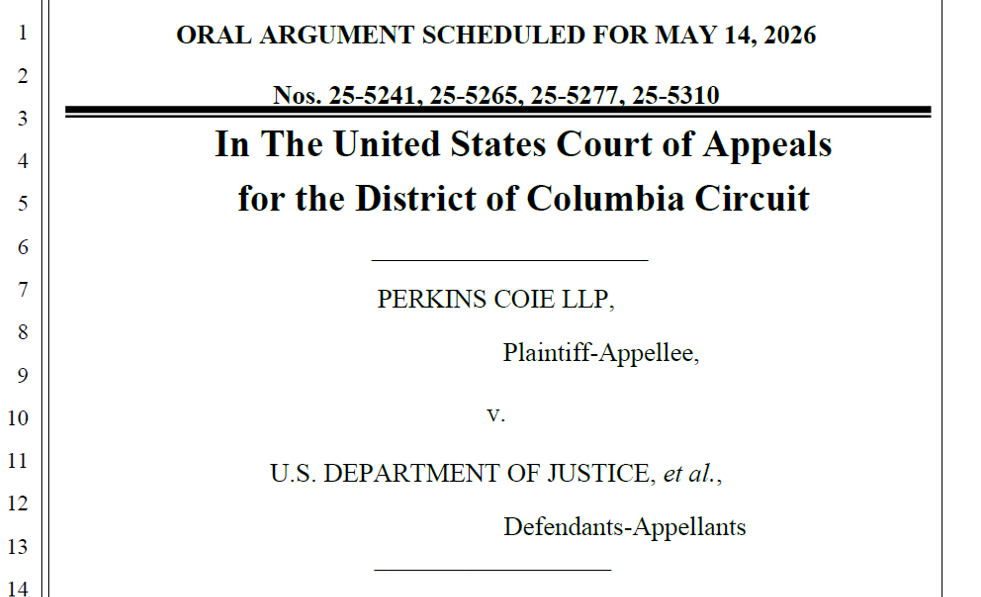
The Social Justice Legal Foundation, now known as the Trial Impact Project, has signed on to an amicus brief alongside thirty other nonprofits in Perkins Coie LLP v. U.S. Dept. Of Justice. The brief supports firms Perkins Coie, Jenner & Block, Susman Godfrey, and WilmerHale in their defense of a district court ruling striking down a series of executive orders as unconstitutional. The plaintiffs argued that the executive orders sought to sanction these firms for their speech: for their choice of clients, hiring practices, and charitable contributions.
The amicus brief points out that as potential clients and co-counsel of firms like the Plaintiffs, the Trump Administration likewise inflicted collateral damage on them by chilling law firms’ willingness to represent nonprofits in litigation adverse to the Administration’s policies. The Department of Justice appealed the lower court ruling, now before the U.S. Court of Appeals for the District of Columbia Circuit.
In its statement of interest, the Social Justice Legal Foundation noted, “[a]s a small organization taking on big cases, we rely on pro bono counsel from private firms to co-counsel our cases and provide trial-level expertise in cases against government and corporate actors.” In urging the court to affirm the judgment, the amici noted that the chilling effect was already notable, as “numerous nonprofit organizations contacted by undersigned counsel were unwilling to sign on to this amicus brief for fear of retaliation from the current Administration, and for fear that speaking out could make it even harder to retain outside counsel.”
Sara Haji, Executive Director, further added, “Our fellowship program exists to create a pipeline of skilled nonprofit litigators who can handle the complex civil rights cases we and our peer nonprofits bring. But right now, the nonprofit litigation model still relies heavily on pro bono counsel. When those counsel decline cases because they are justifiably afraid of retaliation, it affects our mission and our ability to serve our most vulnerable clients.”
You can read the full brief here.